Thursday, 18 August 2016

NATIONAL JUDICIAL APPOINTMENT COMMISSION - JUDICIAL APPOINTMENTS IN INDIA.

Instead of seeing the NJAC verdict as one that leads to a confrontation between the Parliament and the judiciary, the executive must use this as an opportunity to help the Supreme Court in preparing an institutional design so that appointments are fair and transparent.


Two days after the Supreme Court pronounced its verdict on the 99th Constitution Amendment Act and the National Judicial Appointments Commission (NJAC), declaring them to be ultra vires the Constitution.

Questions on judicial review

The reaction of the executive to the NJAC verdict raises the fundamental question,
“Should the exercise of power of judicial review depend upon the will of the Parliament?”
Indian Constitution, unlike the Constitutions of USA and Australia, does not have an express provision of separation of powers but its sweep, operation and visibility are not unclear.
While it is the Parliament’s prerogative to amend the Constitution and make laws, the duty to decide whether the basic elements of the constitutional structure have been transgressed has been placed on the judiciary.
The power to strike down offending amendments to the Constitution on the touchstone of basic structure can be exercised by the superior judiciary alone, uninfluenced by the will of the Parliament.
Our Constitution has given the power of judicial review to the unelected superior judiciary to declare ‘unconstitutional’ a legislative act, once it is found to be violative of the basic structure.


What remains of democracy if there is no rule of law?

The institutional arrangement at the heart of our democracy provides that the will of the people, as reflected in the decisions their elected representatives, is subject to the will of the Constitution, as reflected in the decisions of an independent judiciary.
Parliamentary supremacy refers to the power of Parliament to make laws within the limits imposed by the Constitution.
It also denotes the supremacy of Parliament over the executive, primarily through the accountability of the Council of Ministers to Parliament.
All the three organs of the state derive the power and jurisdiction from our Constitution. Each must operate within the sphere allotted to it.
Judicial function is also a very important sovereign function of the state and provides the foundation for rule of law.

Is it good that judges appoints Judges in India?

It is not wholly correct to say that judges appoint judges in India as consultative participation of the executive is present in the institutionalised procedure prescribed after the Third Judges case.
But assuming it to be so, ours is perhaps the only country where thegovernment is the biggest litigant before the courts, Isn’t it?

Why is this so?

We are one of the very few countries where actions of the political executive in diverse fields, ranging from violation of human rights to wrongful distribution of natural resources and wide range of issues which have huge political ramifications, are brought before the superior judiciary in the public interest litigation (PIL) .
Can judges who are appointed with the direct say of the government be relied upon to deliver neutral and high-quality decisions in such matters?
It is no exaggeration to say that appointment processes shape the ability of courts to hold political institutions to account.

Veto to non-judicial members

In the Second Judges case, the nine-judge Bench exposited that appointment of judges to High Courts and the Supreme Court forms an integral part of the basic structure of our Constitution.
Therefore, the executive cannot interfere with the primacy of judiciary in the matter of appointments.
The NJAC’s flawed composition consisted of the fact that it merged certain components, reflected in the inclusion of Law Minister and two eminent persons and giving any two members the power to veto the decision of the other four.
This directly affected the independence of judiciary in the judicial appointments process.

Way Forward to Fair and Transparent system

Democratic values are strengthened not only by a strong legislature but also by a strong judiciary so that together a mutually respectful and independent partnership on the public’s right to justice is maintained.
The judges who delivered the judgment in the NJAC case also hold the view that an improvement in the working of the collegium system is the need of the hour.
Demands of the Constitution can override the wishes of the people expressed through elected governments.
These are at the very core of a democratic commitment to judicial independence and constitutional supremacy.
In the words of Alexander Hamilton, one of the framers of American Constitution, “where the will of the legislature declared in the statutes is in opposition to the Constitution, the judges ought to be governed by the latter, rather than former.”

(SOURCE - CIVILSDAILY.COM) 

Tuesday, 16 August 2016

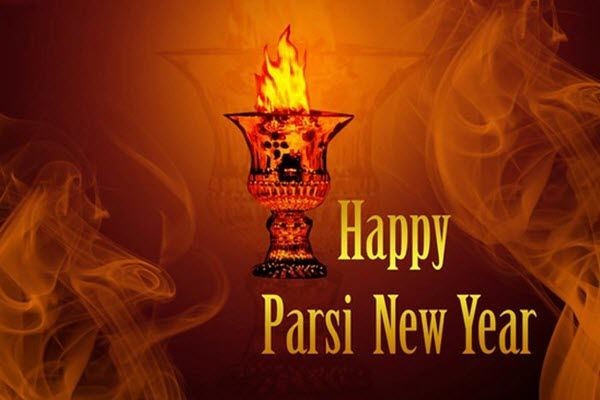
Parsi New Year - Navroz.

                       Parsi New Year

Parsi New Year, which is also known as Navroz, is the day of repentance for Parsi community members. They are supposed to clean their minds and start a new year with freshness, regretting the wrong things done over the past year.

-Devotees observe the auspicious day by visiting the Fire temple wearing new clothes.
-Houses will be cleaned and Rangoli will be drawn outside the doorstep.
-Traditional sumptuous food will be prepared as it is a significant part of the celebrations.

The Navroz festival signifies the coming of the new and passing of the old.


Parsi New Year


Goods And Services Tax (GST) - Everything you need to know about.

EY - Goods & Services Tax (GST)


GST the game changer: GST will be a game changing reform for Indian economy by developing a common Indian market and reducing the cascading effect of tax on the cost of goods and services.
-It will impact the Tax Structure, Tax Incidence, Tax Computation, Tax Payment, Compliance, Credit Utilization and Reporting leading to a complete overhaul of the current indirect tax system.

-GST will have a far reaching impact on almost all the aspects of the business operations in the country, for instance, pricing of products and services; supply chain optimization; IT, accounting and tax compliance systems.

-Government is committed to introduce GST by April 2017 and the tax payers need to be GST compliant to be able to test system changes in time.

ROAD-MAP


-Since the Bill has been passed in Rajya Sabha and Lok Sabha now has to be ratified by minimum of 15 States in their respective assemblies before the President can give its assent for its enactment.

 -GST Council consisting of representatives from the Centre as well as State will be formed within 60 days of the enactment of the Bill. The council  will make  recommendations to the Union and the States on model Goods & Service Tax laws, the rates including floor rates with bands of goods & service tax, the Place of Supply rules and any other matter relating to GST as the Council may decide Reports of Joint Committee constituted by Empowered Committee of the State Finance Ministers on business processes of payment, registration refund and return under GST have been released and put in public domain for suggestions.

GST Council

The GST Council will consist of:

(a) the Union Finance Minister (as Chairman),
(b) the Union Minister of State in charge of Revenue or Finance, and
(c) the Minister in charge of Finance or Taxation or any other Minister, nominated by each state government.

All decisions of the GST Council will be made by three-fourth majority of the votes cast; the centre shall have one-third of the votes cast, and the states together shall have two-third of the votes cast.

The GST Council will make recommendations on:

(a) taxes, cesses, and surcharges to be subsumed under the GST;
(b) goods and services which may be subject to, or exempt from GST;
(c) the threshold limit of turnover for application of GST;
(d) rates of GST;
(e) model GST laws, principles of levy, apportionment of IGST and principles related to place of supply;
(f) special provisions with respect to the eight north eastern states, Himachal Pradesh, Jammu and Kashmir, and Uttarakhand; and
(g) related matters.

 The GST Council may decide the mechanism for resolving disputes arising out of its recommendations. 

-The draft model GST Law was released and put in public domain in June 2016.

-GST Network, an IT backbone of GST, which will facilitate online registration, tax payment and return filing will be launched.

-States will frame their respective GST Legislations to enable them to implement GST. It will be in line with the Central GST Legislation.

Compensation to States 


-Parliament may, by law, provide for compensation to states for revenue losses arising out of the implementation of GST, based on the recommendations of the GST Council. Such compensation could be 100% for a maximum of five years

Salient features of proposed Indian GST system

-The power to make laws in respect of supplies in the course of inter-State trade or commerce will be vested only in the Union government. States will have the right to levy GST on intra-State transactions including on services.

-Centre will levy IGST on inter-State supply of goods and services. Import of goods will be subject to basic customs duty and IGST.

-GST defined as any tax on supply of goods and services other than on alcohol for human consumption.

-Central taxes like, Central Excise duty, Additional Excise duty, Service tax, Additional Custom duty and Special Additional duty and State level taxes like, VAT or sales tax, Central Sales tax, Entertainment tax, Entry tax, Purchase tax, Luxury tax and Octroi will subsume in GST.

-Petroleum and petroleum products i.e. crude, high speed diesel, motor spirit, aviation turbine fuel and natural gas   shall be subject to the GST on a date to be notified by the GST Council.

-Provision for removing imposition of entry tax / Octroi across India.

-Entertainment tax, imposed by States on movie, theatre, etc will be subsumed in GST, but taxes on entertainment at panchayat, municipality or district level to continue.

-GST may be levied on the sale of newspapers and advertisements and this would give the government’s access to substantial incremental revenues.

-Stamp duties, typically imposed on legal agreements by the state, will continue to be levied by the States.

-Administration of GST will be the responsibility of the GST Council, which will be the apex policy making body for GST. Members of GST Council comprised of the Central and State ministers in charge of the finance portfolio.


TIME LINE

UNDERSTANDING OF GST


-GST is a value added tax, levied at all points in the supply chain with credit allowed for any tax paid on inputs acquired for use in making the supply. It would apply to both goods and services in a comprehensive manner with exemptions restricted to a minimum.

-In keeping with the federal structure of India, it is proposed that GST be levied concurrently by the Centre (CGST) and the States (SGST). It is expected that the base and other essential design features would be common between CGST and SGST, across SGSTs for the individual States. Both CGST and SGST would be levied on the basis of the destination principle. Thus, exports would be zero-rated, and imports would attract the tax in the same manner as domestic goods and services. Inter-State supplies within India would attract an Integrated GST (aggregate of CGST and the SGST of the destination State).

-In addition to the IGST, in respect of supply of goods, an additional tax of up to 1% has been proposed to be levied by the Centre. The revenue from this tax is to be assigned to the origin states. This tax is proposed to be levied for initial two years or such longer period as recommended by the GST Council.


GST has been envisaged as a more efficient tax system, neutral in its application and distributionally attractive. The advantages of GST are:
  • -Wider tax base, necessary for lowering the tax rates and eliminating classification disputes
  • -Elimination of multiplicity of taxes and their cascading effects
  • -Rationalization of tax structure and simplification of compliance procedures
  • -Harmonization of center and State tax administrations, which would reduce duplication and compliance costs
  • -Automation of compliance procedures to reduce errors and increase efficiency
Destination principle
The GST structure would follow the destination principle. Accordingly, imports would be subject to GST, while exports would be zero-rated. In the case of inter-State transactions within India, the State tax would apply in the State of destination as opposed to that of origin.
Taxes to be subsumed
GST would replace most indirect taxes currently in place such as:
Central Taxes
  • -Central Excise Duty [including additional excise duties, excise duty under the Medicinal and Toilet Preparations (Excise Duties) Act, 1955]
  • -Service tax
  • -Additional Customs Duty (CVD)
  • -Special Additional Duty of Customs (SAD)
  • -Central Sales Tax ( levied by the Centre and collected by the States)
  • -Central surcharges and cesses ( relating to supply of goods and services)
State Taxes
  • -Value Added Tax
  • -Octroi and Entry Tax
  • -Purchase Tax
  • -Luxury Tax
  • -Taxes on lottery, betting & gambling
  • -State cesses and surcharges
  • -Entertainment tax (other than the tax levied by the local bodies)
  • -Central Sales Tax ( levied by the Centre and collected by the States)


Summary of the Business impact.                                            
                                        
Sourcing
  • Inter-State procurement could prove viable
  • This may open opportunities to consolidate suppliers/vendors
  • Additional duty/CVD and Special Additional duty components of customs duty to be replaced.
Distribution
  • Changes in tax system could warrant changes in both procurement and distribution arrangements
  • Current arrangements for distribution of finished goods may no longer be optimal with the removal of the concept of excise duty on manufacturing
  • Current network structure and product flows may need review and possible alteration
Pricing and profitability
  • Tax savings resulting from the GST structure would require repricing of products
  • Margins or price mark-ups would also need to be re-examined
Cash flow
  • Removal of the concept of excise duty on manufacturing can result in improvement in cash flow and inventory costs as GST would now be paid at the time of sale/supply rather than at the time or removal of goods from the factory.

System changes and transaction management
  • Potential changes to accounting and IT systems in areas of master data, supply chain transactions, system design
  • Existing open transactions and balances as on the cut-off date need to be migrated out to ensure smooth transition to GST
  • Changes to supply chain reports (e.g., purchase register, sales register, services register), other tax reports and forms (e.g., invoices, purchase orders) need review
  • Appropriate measures such as training of employees, compliance under GST, customer education, and tracking of inventory credit are needed to ensure smooth transition to the GST regime

Railway budget to be merged with Union Budget from 2017-18 financial year.

                    Railway budget to be merged with Union Budget from 2017-18 financial year.


Possible implications 

-By doing away with separate railway Budget, half of the railways’ problems would be solved.
-The minister, in fact, would be a loser but railways will certainly gain. However, in another sense, the minister would become more self-disciplined and not recklessly announce bounties, projects and trains, because in that case he has to take a nod from the finance ministry in advance.
-Earlier, the railway minister was behaving like a monarch and did what he wanted. “Roll back or resign” was the dictum of the day.

More benefits 

-The other benefits for the railways are obvious. As a ministry, subservient to the finance ministry, the railways will not have to pay dividend which amounts to about Rs 4,000-5,000 crore annually.
-Again, the burden of pay commission would totally fall on the finance ministry.
-Moreover, the budgetary support will not be dwindled annually, as a routine. In actual practice, the finances of the railways, as part of central finances, would not deteriorate, but improve. What else does the railways want?

The separate rail Budget has outlived its utility. When it was introduced in 1924 on the recommendation of the Acworth Committee, conditions were different. Railways then used to generate most of the GDP and any change in the exchequer accounting process would disturb the railways’ financial system and working.

Moreover, to make the railways more Indian-oriented in its approach and manifestation, the central control of the railway Budget was creating a stumbling block in bringing it more down to earth, to stand as an independent body. Slowly, it would nationalise itself to be freed from the capital invested in the shape of a guaranteed and semi-guaranteed system.

There have been many ups and downs for the railways due to internal and external factors. But never did the railways create confusion and chaos and solved its problems more gracefully and on its own.

 However, since Independence, there has been a drastic change in its approach and functioning. Once it enjoyed the status of being one of Navaratnas of Indian public sector, but soon after it fell from grace, the clamour of de-nationalisation started haunting it. The Rakesh Mohan Committee, while noting the decline, suggested corporatisation of railways.

Current Affairs-3 August 2016

1. India climbs up in innovation ranking

- India climbed 15 spots, from 81 last year, to 66 in the Global Innovation Index (GII) and maintained the top spot in the Central and South Asia regions
-GII: Released by Cornell University, INSEAD and the World Intellectual Property Organization (WIPO)
-India: Scored high on tertiary education and R&D, the quality of its universities and scientific publications, its market sophistication
-Ranks first in the world in information and communication technology service exports
-Ranks second on innovation quality among middle-income economies, overtaking Brazil.

2. Joao Havelange (Brazilian lawyer), who as president transformed FIFA into a multi billion-dollar business has died at age of 100.


3. Delhi govt ban Kite-flying thread, Chinese Manjha in the National Capital.


4. BIHAR today became the second state in India (First ASSAM)and the first Opposition-ruled state to ratify the Constitution (122nd Amendment) Bill, 2014 enabling implementation of Goods and Services Tax.


5. Jnanpith awardee Punjabi writer Gurdial Singh passes away at age of 83 at Bathinda.


6. Country’s first ever comprehensive Anti-Human Trafficking Bill will be passed by December: Ministry of Women & Child Development, Government of India Minister Maneka Gandhi.


Monday, 15 August 2016

Everything you need to know about BREXIT.

What has happened?

A referendum – a vote in which everyone of voting age can take part was held to decide whether the UK should leave or remain in the European Union and Leave won.<what is the difference b/s referendum and plebiscite?>

What is this UK, Britain, Ireland, Republic? What’s going on? Is Scotland a separate country?


Without going into the history- 
  • Full name is United Kingdom of Great Britain and Northern Ireland i.e Great Britain plus N.I.
  • Great Britain – It contains 3 somewhat autonomous regions – England, Wales and Scotland
  • Republic of Ireland separated from northern Ireland and UK in 1920s and is a separate country now <Belfast is capital of which Ireland and what is the capital of Wales and Scotland?>

But why this referendum

Conservative govt led by David Cameron had promised this referendum if they won the general election and as they won this referendum was held

What is European Union?

  • It is an economic and political partnership involving 28 European countries <latest country to join EU?>
  • It is a single market (common market) allowing goods and people to move around, basically as if the member states were one country. So basically any French citizen can travel to Germany and work there without visa.
  • You can visit whole of EU with a single visa <no internal borders>

I had to take a separate visa to travel to London. How about that?

  • So this common visa thing is applicable only to countries that are party toSchengen area <where is Schengen btw?>
  • There are 26 Schengen countries (22 EU + 4 Non EU)
  • 4 Non EU – Iceland, Norway, Switzerland, Liechtenstein <btw Liechtenstein is a double land locked country. Look in the map and find out which other country is doubly landlocked, There’s only one other>
  • 6 EU not party – Bulgaria, Croatia, Cyprus, Ireland, Romania and the UK.

So as UK is not party to Schengen, you had to take Visa.

What about euro? I had to use pound in UK. Isn’t the Euro currency of EU?

  • Euro currency is used by Eurozone countries. Eurozone is subset of EU. Only 19 EU countries are part of it. Obviously UK is not party to it. 
  • Euro is also used by 4 other European countries – Vatican, Andorra, San Marino, Monaco

Any history ? How did EU begin?

  • It grew out of a desire for peace in a war-torn and divided continent. It started in 1951 with European Coal and steel community of 6 countries by treaty of Paris<France, Germany, Italy, the Netherlands, Belgium and Luxembourg>
  • 1957 – European Economic Community (EEC) or common market was formed by treaty of Rome,
  • 1973 – Britain, Denmark and Ireland joins the EEC <total 9 countries now>
  • 1992 – Maastricht treaty was signed and comes into force in 1993. Formal beginning of EU
  • 2002 – Euro replaces national currency in eurozone

What does EU do?

  • Eu oversees co-operation among its members in diverse areas, including trade, the environment, transport and employment
  • Common security and foreign policy
  • coordinates policy on asylum, immigration, drugs and terrorism <that’s why so much concern over migration fro middles east and north Africa>
  • EU policies on workers’ rights and other social issues <UK not part of this social chapter either>
  • Promotes human rights, give aid to agriculture, fisheries etc

Okay, sounds great but how does it all work?

EU works through 4 main institutions
  1. European Commission – All powerful bureaucracy of member states <each country, one representative>, propose laws, implement laws, job is to promote European interest, not the interest of member countries, HQ in Brussels <where is Brussels>
  2. European Council – It’s a political body, leaders meet here
  3. European Parliament – Directly elected MPs <MEPs> vote on almost all the issues now days. It sits in Strasbourg <where is Strasbourg?>
  4. European court of rights – name explains everything <where is its headquarters?

Why do Brits want to leave EU?

  1. Sovereignty – that Britain ceded its sovereignty, right to pass its own laws to bureaucrats sitting in Brussels <Doesn’t India lose its sovereignty by being member of UN?>
  2. Regulations – That Brussels imposed too many regulations that hurt British business interest
  3. Money – Billions of pounds of entry fee with very little to show in return <Britain don’t have many farmers to get agriculture subsidies>
  4. Open borders/ migration – even though Britain is not part Schengen, workers from rest of the EU can come their freely and work there. Large numbers from eastern europe came just to claim British benefits, social security and all <so called welfare tourism>
  5. Ever Closer Union – detested the idea of United states of Europe <closer political union, confederation sort of thing>

Why did Cameron want UK to stay in EU?

  1. Single market – much easier to sell things while being member of single market
  2. Security
  3. Britain’s status in the world is enhanced as part of EU

How is single market different from free trade area?

  • In FTA there are no tariffs except on some negotiated goods and services but in single market, even labour mobility is free
  • In Single market, you impose common tariffs on all imports, it;s like a single country for the purpose of trade and commerce
  • There are common standards etc. <environment, labour, quality etc.>

What is European free trade association (EFTA)?

  • It is FTA of 4 European countries -Iceland, Norway, Switzerland, Liechtenstein<do you recall they are all part of Schengen>
  • All of them have signed FTA with EU. Britain can sign similar FTA with EU now

What happens now?

  • Britain would negotiate its exit <under Lisbon treaty>, But the fear is of contagion. Eurosceptic parties of other countries would also press for similar referendums.  
  • Plus as Scotland has voted overwhelmingly in favour of stay (68%), there would be fresh demand for referendum on Scottish independence. Similarly is the case with northern Ireland.

Impact on India

  • No direct impact but expect turbulence in stock and forex market. Panicky investors may withdraw their hot money out of India
  • On positive side, India can sign FTA with Britain
    (source - civilsdaily.com)

Current Affairs-2 August 2016

Current Affairs

1. Nita Ambani was today elected as an individual member of International Olympic Committee.
She becomes the first Indian woman to join the prestigious body which governs Olympic sports in the world.

2. Vijay Rupani chosen as the new CM of Gujarat. Nitin Patel to be Deputy CM of Gujarat.
Mr. Rupani represents Rajkot West in the Gujarat Assembly. 
Mr. Rupani began his political innings as a student activist attached to ABVP, the student wing of RSS. He naturally moved to RSS and then to the BJP. Mr. Rupani was jailed during the Emergency. 
He has been the Mayor of Rajkot and served as minister in the cabinet of Narendra Modi. 

3. Assam has become the first Indian state to ratify the GST Constitution Amendment Bill, which is recently passed by the Parliament of India. The 122nd Constitution amendment bill needs to be ratified by 50% of the Indian states before it can be sent for Presidential assent.The Goods and Services Tax (GST) is India’s most important indirect tax reform since Independence. Under it, a single rate of GST will replace various taxes to ensure seamless transfer of goods and services.

4. A 12-day long Krishna Pushkar festival has started in Telangana and Andhra Pradesh. The festival comes once in every 12 years. A daily ‘harati’ programme will be organised at Ibrahimpatnam near Vijayawada, where the Godavari flows into Krishna.
5. India’s first Nuclear Suppliers’ insurance policy for ‘Right to Recourse’ was unveiled by India Nuclear Insurance Pool (INIP).

-The policy was unveiled by Atomic Energy Commission (AEC) chairman Sekhar Basu in Mumbai, Maharashtra. INIP is the 27th global nuclear insurance pool which was launched by state run General Insurance Corporation of India (GIC Re), in association with non-life insurance companies.
-New India Assurance Co (NIAC) and INIP will issue the policy and administer the claims on behalf of the pool.

6. "Gaofen-3"

-China has successfully launched “Gaofen-3” an earth observation satellite into orbit by the Long March 4C rocket from the Taiyuan Satellite Launch Centre in Shanxi Province.
-The Gaofen-3 is China’s first low-orbit remote sensing satellite and is capable of capturing high-resolution images accurate down to about 1m.
-It will be used for disaster warning, weather forecasting, water resource assessments and the protection of maritime rights.

7. Mihir Shah committee, which was formed to restructure the water agencies, is recently in news because of its recommendations to set up new National Water Commission (NWC).
- As per the recommendations, NWC will be an autonomous body and will have a countrywide base and mandate and greater human-power.
-The committee has also warned against the perils of interlinking of rivers and dependence on large dam projects.
-Beside this, the committee has also suggested that there is no need to restructure water agencies viz. Central Water Commission (CWC) and the Central Ground Water Board (CGWB).
-The committee was set up by the Ministry of Water Resources, River Development and Ganga Rejuvenation, which has submitted its report in July 2016.

8. Reserve Bank of India (RBI) has kept policy rates unchanged in the recently released 3rd bi-monthly monetary policy review for FY 2016-17.
-The repo rate at which RBI lends to the system has been retained at 6.5 %, while the reverse repo rate which is paid to banks has been maintained at 6 %.
-The RBI has also kept the Cash Reserve Ratio (CRR) and Statutory Liquidity Ratio ( SLR) unchanged at 4.0 % and 21.25 %.
-The Marginal Standing Facility (MSF) rate and the Bank Rate have been kept at 7%.

9. To mark the 70th anniversary of India’s Independence from the British rule, Prime Minister Narendra Modi has released a theme song “70 Saal Azadi Yaad Karo Kurbani” for Tiranga Yatra, which will be organised from August 16 to 23, 2016 across the country.
-The theme song has been composed by Dr. Kesiraju Srinivas, who is popularly known as Ghazal Srinivas.
-The yatra will be the symbol of social harmony and unity in India and will also highlight the contributions of freedom fighters and martyrs among the school children during the celebration.

10. The first National Conference of Investigation Agencies will be held on August 12-13, 2016 at Vigyan Bhawan in New Delhi.
-The conference will be organized by the Bureau of Police Research and Development (BPR&D) in coordination with National Investigation Agency ( NIA).
-The purpose of the conference is to provide an annual national platform to all the officers of law enforcement agencies engaged in investigation tasks to discuss the latest laws and judgments and their implications for investigation and prosecution and to deliberate on new legislation/ criminal law amendments and systematic changes for meeting new challenges in investigation.

11.National Thermal Power Corporation Limited (NTPC), an Indian public sector company, has recently listed the world’s first Indian green Masala bond on the London Stock Exchange (LSE).
-With this, NTPC has become the first-ever Indian quasi-sovereign to issue a Masala bond on LSE.
-The bond is Climate Bonds Initiative certified and will be listed on London Stock Exchange’s green bonds segment.
-NTPC will invest the proceeds of the green Masala bond in the renewable energy market as it seeks to add more wind and solar power projects to its portfolio to support the Indian government’s ambition to generate 175GW of renewable energy by 2022.

12. M. S. Subbulakshmi, legendary Indian carnatic vocalist, will be honoured at the United Nations General Assembly (UNGA) on India’s 70th Independence Day (August 15, 2016).
-To pay homage to Subbulakshmi’s birth centenary, Oscar-winning composer A.R. Rahman will perform at UNGA in New York, United States. With this, Rahman will become only the 2nd Indian artist after Subbulakshmi to perform at the UN after she was invited for a performance 50 years ago.
-The concert will be organized by the Indian mission in co-ordination with Chennai-based Sankara Nethralaya, a not-for-profit eye institution, at the UNGA.

13.First-ever SAARC Young Parliamentarians Conference (YPC) on ‘Peace and Harmony for Development’ will be held from August 16 to 18, 2016 in Islamabad, Pakistan.
-The SAARC YPC 2016 intends to offer young parliamentarians’ narrative as a prelude to the 19th SAARC summit that Pakistan will be hosting in November 2016. From India, a 3-member Parliamentary delegation will attend the SAARC YPC 2016.

14. Takehiko Nakao has been re-elected for a 2nd term as the President of the Asian Development Bank (ADB), which is beginning from November 2016.
-With this, he will remain head of the ADB till 2021.
-Nakao was first elected to the role in 2013 to serve the remaining three and a half years of the term of his predecessor, Haruhiko Kuroda.

15.Theme of the 2016 Rio Olympics is “World peace and Environment”.
-It is the 31st edition of Summer Olympic Games, which has recently started at the Maracana Stadium in Rio de Janeiro, Brazil from August 5 and will be continue till August 21, 2016.
-The motto of the Rio 2016 is “A new world” and the official mascot is Vinicius. In it, 207 countries and the refugee teams are taking part.

Current Events-1 August 2016

1. Nagaland decided to grant 33 percent women reservation in urban local bodies announced by the CM TR Zeliang during state level watershed conference held in Kohima.
2. Odisha Government to make Adhar card mandatory for the procurement of paddy under National Food Security Scheme and work under MGNREGA.
3. India’s first touch-and-feel garden for visually impaired has been inaugurated by the Kerala Assembly Speaker P Sreeramakrishnan on the Calicut University campus in Thenjipalam, Kerala.
-The garden with nearly 6 dozen aromatic plants will provide the visually impaired a unique opportunity of learning.
-They can study the plants not only by touching, feeling, smelling and tasting them, but also through audio inputs to get complete information about them.

4. India’s first facility to produce nickel, a metal for which India is completely dependent on imports, has been launched by the Hindustan Copper Limited (HCL) at its Indian Copper Complex (ICC) at Ghatshila in Jharkhand.
-The new facility “Nickel, Copper and Acid Recovery Plant” is the first facility in India to produce nickel metal of London Metal Exchange (LME) grade from primary resource.
-The annual demand for pure nickel in India is around 45,000 MT and its domestic market is totally dependent on import.

5.Pradeep Kumar Sinha committee - NCTF
-The Union Government has constituted a National Committee on Trade Facilitation (NCTF) under the Chairmanship Pradeep Kumar Sinha, who is the Cabinet Secretary of India, to develop the pan-India road map for trade facilitation.
-The NCTF has been constituted in line with the World Trade Organisation (WTO) pact in April 2016 on Trade Facilitation Agreement (FTA), which India also ratified.
-The committee will facilitate domestic coordination and implementation of the TFA provisions.
-It will also synergise the various trade facilitation perspectives across the country and focus on an outreach programme for sensitization of stakeholders about it.

Railway Budget to be merged with General Budget from 2017

Railway Budget to be merged with General Budget from 2017

-92-year-old practice of presenting a separate Railway Budget is set to come to an end from the next fiscal, with the Finance Ministry accepting Railway Minister Suresh Prabhu’s proposal to merge it with the General Budget.

-If the merger happens, Indian Railway will get rid of the annual dividend it has to pay for gross budgetary support from the government every year.

-With the merger, the issue of raising passenger fares, an unpopular decision, will be the Finance Minister’s call.

Facts.
 -The "Acworth Report" led to reorganization of railways, the railway finances of India were separated from the government finances in 1924.
-First Railway budget was presented in the year 1924.

Everything you need to know about MTCR, NSG and Conflict between India and China.

The Backstory

-Since 2008, India has been pushing forward to become an NSG member, where decisions are consensus based and not based on majority votes

-It has also been looking for membership of other groups such as MTCR

-India recently became the Member of MTCR, however its bid for getting membership of NSG was not successful because of opposition from China and 12 other NSG members


1. All about MTCR


What is the Missile Technology Control Regime (MTCR)?

-Established in April 1987, it is a voluntary association of 35 countries and 4 “unilateral adherents” that follow its rules: Israel, Romania, Slovakia, Macedonia.


-The group aims to slow the spread of missiles and other unmanned delivery technology that could be used for chemical, biological and nuclear attacks.


-The regime urges members, which include most of the world’s major missile manufacturers, to restrict exports of missiles and related technologies capable of carrying a 500 kg payload at least 300 km, or delivering any type of weapon of mass destruction.


How does one become a member of MTCR?


-Prospective members must win consensus approval from existing members. United States policy had been that members that are not recognised nuclear-weapon states — including India — must eliminate or forgo ballistic missiles able to deliver a 500 kg payload at least 300 km

-The US, however, made an exception in 1998 for Ukraine, permitting it to retain Scud missiles and, in October 2012, South Korea was allowed to keep ballistic missiles with an 800-km range and 500-kg payload that could target all of North Korea

-For India, the US have waived these terms, allowing it retain its missile arsenal

Does joining the MTCR make getting missile technology easier?


-There are no special concessions for MTCR members. But India hopes its MTCR membership will be one more reason for the US to consider exporting Category 1 UAVs, Reaper and Global Hawk, which have been key to counter-terrorism efforts in Afghanistan, Pakistan, Somalia and Yemen

-These drones have so far been sold to only one country, the UK, though unarmed versions have also been made available to Italy and South Korea

-The US has been rethinking rules on exports, aware that competitors in Israel, Russia and China are working on similar products — and India wants to be at the head of the queue when the Reaper and the Global Hawk go on the market

Are there any sanctions for breaking MTCR rules?


-Rule breakers can’t be punished.

-However, US law mandates sanctions for companies and governments that export MTCR-controlled items. The sanctioned entity can’t sign contracts, buy arms and receive aid for two years or more.

Does the MTCR actually stop the spread of missile technology?


-Yes and no. North Korea, Iran and Pakistan acquired ballistic missile technology from China. But then, China began to feel the pinch of US technology sanctions — and announced, in November 2000, that it would stop exporting ballistic missile technology.

-Four years later, it applied for MTCR membership — but has been denied entry because of suspicion that some companies in the country are secretly supplying technology to North Korea.

-Many others dropped missile programmes because of MTCR pressure: Argentina abandoned its Condor II ballistic missile programme (on which it was working with Egypt and Iraq) to join the regime. Brazil, South Africa, South Korea and Taiwan shelved or eliminated missile or space launch vehicle programmes. Poland and the Czech Republic destroyed their ballistic missiles.

-It is possible China may now seek some kind of bargain, whereby it is given entry to the MTCR in return for letting India get into the NSG, where it wields a veto.

What after MTCR?


-Admission to the MTCR would open the way for India to buy high-end missile technology

-It will also make India’s aspiration to buy state-of-the-art surveillance drones such as the U.S. Predator, made by General Atomics.

2. All about NSG


Why does India want to be in the Nuclear Suppliers Group (NSG)?


-Following India’s 1974 nuclear tests, the US pushed for setting up a club of nuclear equipment and fissile material suppliers.


-The 48-nation group frames and implements agreed rules for exporting nuclear equipment, with a view to controlling the spread of nuclear weapons; members are admitted only by consensus.


-India has been trying, since 2008, to join the group, which would give it a place at the high table where the rules of nuclear commerce are decided — and, eventually, the ability to sell equipment.

-Many countries that initially opposed its entry, like Australia, have changed stance; Mexico and Switzerland are the latest to voice support. India’s effort has been to chip away at the resistance, leaving only one holdout — China. But until China accepts India’s entry, there is no hope of membership.


Why does the US want India in the NSG?


-The answer lies in the US effort to strengthen the global nuclear non-proliferation regime, whose centrepiece is the 1968 Nuclear Non-proliferation Treaty, or NPT.


-The NPT defines “nuclear weapons states” as those that tested devices before January 1, 1967 — which means India cannot ever be one.

-India — like Israel and Pakistan — thus refused to sign the treaty. From 2005, though, President George W Bush’s administration sought ways to deepen strategic cooperation with India.


-Nuclear energy was a key means to strengthen cooperation, but since India wasn’t a member of the NPT, technology couldn’t be shared. Then, a way forward was found — the US-India Civil Nuclear Agreement.


-India agreed to separate its civilian and military nuclear programmes, and put the civilian part under International Atomic Energy Agency safeguards.


-India also changed its export laws to line up with the NSG, MTCR, Wassenaar Arrangement, and Australia Group — the 4 key nuclear control regimes.

-The US agreed to shepherd India’s entry into these regimes, which meant India would for all practical purposes be treated like an NPT member, even though it wasn’t one.


Why doesn’t Pakistan want India in?


-The Pakistani argument is that giving India easy access to fissile material and technology for its civilian nuclear programme means it would have that much more material for its military nuclear programme.


-Thus, Pakistan says, the move to give India NSG membership is fuelling a nuclear arms race.


-But this argument falls apart because Pakistan is resolutely opposed to a key international agreement called the Fissile Material Cut-Off Treaty (FMCT), which would cap the military nuclear stockpiles of all countries. The FMCT ought to put an end to Pakistan’s fears, but Islamabad has refused to sign.

Why has China opposed India’s Bid for NSG?


-Chinese diplomats say Beijing wants NSG entry to be norm-based , in other words, whatever rules govern Indian entry should apply to others too.


-Norm-based entry would, presumably, help Pakistan gain entry, something many in the NSG are certain to resist because of the country’s record as a proliferator of nuclear-weapons technology to Iran, Libya and North Korea.


Why then did China go along with the NSG waiver in 2008?


Geopolitics!


-The 2008 one-time waiver allowed nuclear commerce between NSG members and India — the agreement that now allows Westinghouse, and its competitors in France or South Korea, to bid to set up civilian reactors in India.


-The waiver came only after President Bush rang President Hu Jintao and called in a favour. Back then, US-China relations were riding high — on the back of surging trade, and a common vision of how the international order should be structured.


-Today, President Barack Obama and President Xi Jinping are at odds over Chinese muscle-flexing in the South China Sea. The odds of a phone call changing the state of play are next to zero.


Why does India want to join Proliferation control regimes?


-India’s membership of the NSG and other proliferation control regimes notably the Missile Technology Control Regime (MTCR), the Australia Group, and the Wassenaar Arrangement is important in order to shatter the myth of it being an “outlier” to the non-proliferation regime as also to facilitate its trade, both imports and exports, of nuclear, missile and other related sensitive technologies.

-Membership of these regimes will enhance India’s status in this critical area from merely an adherent to a rule maker.

-It will also enable India to ensure that these regimes perform their mandated role of promoting non-proliferation effectively and not hurt its commercial interests.

Why India’s recent NSG bid is being criticized?


-Many experts believe that after the clean waiver of 2008 and the 2011 amendment of the NSG rules (that non-NPT countries would not be entitled to the transfer of the reprocessing and enrichment technology), there is not much merit in seeking a membership of the NSG.

-The worst outcome of this aggressive bidding was that at NSG forum India’s nuclear regime got hyphenated with Pakistan. It has taken a great deal of effort on the part of successive governments in India to kill the idea of that hyphenation.

-It suits China ideally to put India in the same bracket as Pakistan. However for India it is diminishing to get itself compared with rogue state like Pakistan who have a dismal track record with respect to Nuclear Proliferation.
(source civilsdaily.com Indian Express, 
DailyO, NDTV, The wire)